Recycling and Sustainability for Landscaping Sidcup
 At Landscaping Sidcup, sustainability is built into every stage of our work, from site clearance and soil reuse to the careful sorting of green waste and packaging. Our goal is to support a greener local environment while keeping landscaped spaces neat, resilient, and practical for everyday use. We aim for a minimum recycling percentage target of 85% across suitable project waste, and we continually look for ways to improve that figure through better separation, smarter procurement, and stronger local partnerships.
Recycling in Sidcup landscaping is not just about taking materials away; it is about making sure they are processed correctly and put back into the supply chain wherever possible. We separate wood, soil, hardcore, green cuttings, plastic, metals, and cardboard so that each stream can be handled efficiently. This approach reflects the wider boroughs’ emphasis on waste separation, where residents and businesses are encouraged to sort materials carefully before collection or transfer. By aligning our site practices with that culture, landscape recycling in Sidcup becomes cleaner, more effective, and easier to measure.
 One of the most important parts of our sustainability strategy is working with local transfer stations and licensed waste facilities. These nearby hubs help reduce unnecessary travel distances, lower emissions, and keep materials moving through compliant recycling routes. Green waste can be chipped or composted, soil can often be screened and reused, and inert materials can be processed for future construction use. Using established local transfer stations also helps us improve traceability, ensuring that waste is handled responsibly from collection through to final recovery.
Reducing Waste, Reusing Materials
Our approach to recycling for landscaping in Sidcup focuses on reuse before disposal. Wherever possible, timber offcuts are repurposed, paving materials are assessed for salvage, and excavated soil is screened for reuse on suitable projects. This helps reduce demand for new raw materials and lowers the environmental impact of each job. We also keep a close eye on packaging waste, choosing suppliers who use recyclable wrapping, cardboard, and returnable containers. These practical decisions may seem small individually, but together they create a meaningful reduction in waste sent to landfill.
Green material is one of the most common waste streams in local landscaping work, so we make sure it is separated carefully. Grass cuttings, branches, hedge trimmings, and leaves are all kept distinct from general rubbish so they can be turned into useful compost or biomass feedstock. In a borough setting where mixed collections can quickly become contaminated, this separation is especially important. By managing landscaping waste in Sidcup with clear sorting methods, we help protect recycling quality and support the broader circular economy.
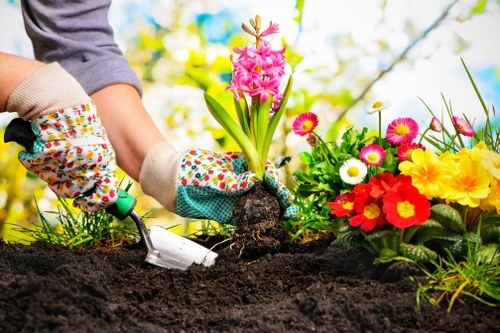 Our sustainability plan also includes partnerships with charities and community organisations. Suitable leftover materials, surplus plants, pots, and usable timber may be directed to charitable groups, local green initiatives, or community projects where they can still add value. These partnerships help extend the life of materials that would otherwise be discarded, while also supporting social causes in the area. In some cases, donations of shrubs, compost, or reclaimed decorative pieces can help community gardens, training schemes, and environmental projects thrive.
Lower-Carbon Operations Across Sidcup
Transport is another major part of sustainable landscaping, which is why we invest in low-carbon vans and more efficient route planning. Our newer vehicles are selected for improved fuel economy and reduced emissions, helping to lower the carbon footprint of each visit. Where possible, we plan jobs in clusters to cut down on repeated journeys, and we load materials efficiently to minimise fuel use. For Sidcup landscaping services, this means a quieter, cleaner, and more responsible operation across local streets and neighbourhoods.
We also take note of how local boroughs approach waste separation and recycling compliance, because that influences how materials are prepared on site. Mixed waste is harder to process and more likely to be rejected, so we use separate containers and clear labels for different waste types. This is particularly useful for jobs involving soil removal, pruning, or refurbishment of outdoor areas, where several waste streams can appear at once. By keeping recycling disciplined and straightforward, landscaping Sidcup projects can support better outcomes without slowing work down.
Another part of our sustainability promise is choosing materials with a lower environmental impact. When specifying hard landscaping products, we consider recycled aggregates, responsibly sourced timber, and durable materials that reduce replacement frequency. For planting schemes, we favour native and pollinator-friendly species that suit local conditions and require less intensive maintenance. These choices reduce long-term resource use and help gardens and commercial grounds stay attractive with fewer inputs. In this way, Sidcup landscape sustainability becomes a long-term planning principle rather than a one-time action.
Working Toward a Greener Future
We see recycling as part of a broader responsibility to protect the environment while maintaining high standards of outdoor design and upkeep. From separating rubble and vegetation to reusing soil and redirecting appropriate items through charity partnerships, every part of the process is considered carefully. The combination of local transfer stations, low-carbon vans, and a clear recycling percentage target gives our work a measurable framework for improvement. This helps us stay accountable and keeps sustainability central to the way we operate.
As local expectations continue to rise, landscaping companies must do more than simply remove waste; they must manage it intelligently. That includes supporting borough-level separation habits, making informed choices about disposal routes, and keeping a close watch on recycling rates across each project. For Landscaping Sidcup, the aim is to deliver practical outdoor spaces while reducing environmental impact at every opportunity. Careful recycling, responsible logistics, and community-minded partnerships all play a part in making that happen.
 In the months and years ahead, we will keep refining our approach to support cleaner operations and better material recovery.
  That means continuing to improve sorting on site, expanding reuse opportunities, and working with facilities that can process waste efficiently and responsibly. With an 85% recycling target, low-carbon vans, local transfer station use, and charitable reuse options, Sidcup landscaping and recycling can move forward with purpose. The result is a service that respects both the landscape and the wider environment, helping the area grow greener in a practical, measurable way.